Last Updated: September 15, 2026
Masa harina is the finely ground flour made from nixtamalised corn, and it is the single ingredient that separates a real corn tortilla from a sad, crumbly impostor. This guide from El Cielo covers what masa harina actually is, how it differs from the corn products sitting in your supermarket aisle, and how to use it well. If you have ever wondered why tortillas you make at home never taste like the ones from a proper taqueria, the flour is usually the answer.
The name is Spanish for "dough flour", which tells you most of what you need to know. It is not cornmeal, and it is not cornflour, even though the packaging in some shops does its best to confuse you. Masa harina is nixtamalized corn that has been cooked and soaked in an alkaline (lime) solution, milled in volcanic rock and made into dough, and then dried and ground into a fine powder (harina). That treatment changes the corn completely.
The three get swapped constantly, and the results are wildly different.
Buy the wrong one and you will end up with a dough that cracks, crumbles, or refuses to hold together at all.
Nixtamalisation is the ancient Mesoamerican technique of cooking and soaking corn in an alkaline solution before grinding it. Dried corn is simmered with lime stone, left to soak overnight, then rinsed, drained and ground (Traditional Mexican cuisine - ancestral, ongoing community culture, the Michoacán paradigm). The process loosens the corn's outer hull, makes the grain easier to digest, and transforms the flavour from flat and starchy to something rounder and distinctly corn-sweet.
The chemistry matters less than the outcome: nixtamalisation is what gives masa its characteristic aroma and its ability to form a smooth, elastic dough. Skip it and you are working with a fundamentally different ingredient. Mexican cuisine's place on the UNESCO Intangible Cultural Heritage list, recognised in 2010, rests partly on traditions like this one.
Traditional makers stone-grind the soaked corn into a wet masa, then dry and mill it into flour. That is the difference between masa harina and fresh masa, and it is why a good tortilleria's tortillas taste the way they do.
Making corn tortillas from masa harina takes about 30 minutes once you have done it twice, and the ingredient list is two items long. The technique is simple, but the dough's texture is everything. Get the hydration right and the rest follows.
You will need masa harina, warm water, a pinch of salt, a tortilla press or a heavy flat object, and a hot dry pan or comal.
Expected result: tortillas that puff slightly, stay flexible, and smell like toasted corn.
Once cooked, place the tortillas in a tortilla warmer or a dry tea towell, this will help them steam and keep warm before serving
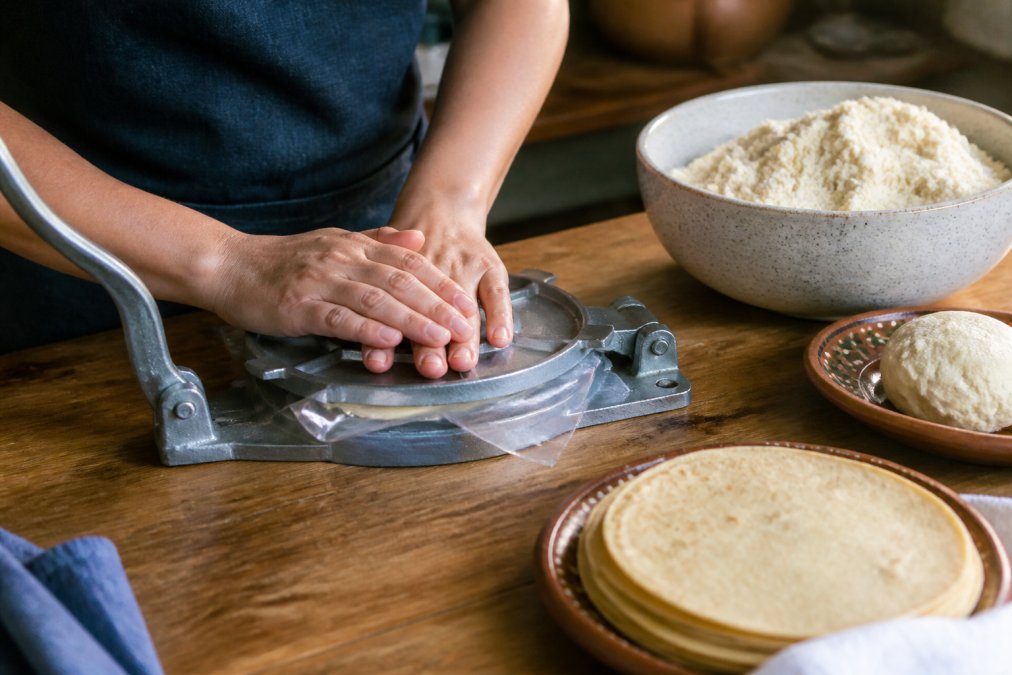
Hands pressing masa dough in a tortilla press on a wooden kitchen bench, with a bowl of masa harina and a stack of cooked corn tortillas nearby
The biggest mistake is a dough that is too dry. If the edges of your pressed tortilla crack, add water a tablespoon at a time and knead again. A common error is also skipping the rest period, which leaves the flour unevenly hydrated and the dough tough. On the other hand, if you added too much water, just add a bit more dry masa harina to get the balance right.
The second mistake is a cold pan. Tortillas need real heat to puff and colour properly. The third is overworking the dough after resting, which makes it stiff. Treat it gently and it will behave.
There is no perfect substitute for masa harina, and most swaps fail badly. Cornmeal and untreated corn flour will not form a pliable dough, so tortillas made with them crack and crumble. Cornstarch is even further off the mark.
Tortillas are the headline act, but masa harina earns its shelf space in plenty of other dishes. Tamales use a masa dough steamed in corn husks. Gorditas are thick, stuffed rounds. Sopes have a raised rim that holds toppings. Pupusas, from neighbouring Central American traditions, are stuffed and griddled.
You can also use masa harina to thicken stews and chillies, giving them a subtle corn sweetness and a silkier body than plain flour. A spoonful stirred into a pot of beans adds depth. And if you make your own tortilla chips, fresh masa beats anything from a packet.
Masa harina keeps well if you treat it like the flour it is. Store it in an airtight container in a cool, dark cupboard, and it will hold for several months. Because it is a whole-grain-style flour, it contains natural oils that can eventually turn rancid, so buy in quantities you will actually use.
For longer storage, keep masa harina in the freezer in a sealed bag and bring it to room temperature before use. Always check for a stale or bitter smell before mixing. Once you have made dough, use it the same day, as it dries out quickly.
Quality comes down to how the corn was treated and how finely it was ground. Good masa harina smells sweet and distinctly of corn, not dusty or flat. It should feel soft between your fingers, not gritty, and it should hydrate into a smooth dough without a fight.
Look for brands that specify nixtamalisation on the label, and prefer products with a clear production date. If you can buy from a specialist supplier who actually makes tortillas, you are usually getting fresher stock than a supermarket shelf. At El Cielo, our corn tortillas are using the traditional nixtamalisation process, so the masa we work with is the same style you want in your own kitchen.
|
Product |
What It Is |
Best For |
|---|---|---|
|
Masa harina |
Nixtamalised corn flour |
Tortillas, tamales, sopes |
|
Cornmeal |
Coarse untreated ground corn |
Polenta, cornbread |
|
Corn flour |
Fine untreated corn or starch |
Baking, thickening |
|
Fresh masa |
Wet nixtamalised dough |
Same-day tortillas |
Masa harina is made from corn that has been nixtamalised, a process where dried corn is cooked and soaked in an alkaline solution, then ground into flour. This gives it a distinctive flavour and makes it suitable for tortillas and tamales. Cornmeal is simply ground dried corn without nixtamalisation. It has a coarser texture and is used for polenta or cornbread, not for making flexible tortillas.
Regular corn flour is not a direct substitute for masa harina because it hasn't been nixtamalised. It lacks the specific properties that make masa harina work for tortillas. If you use corn flour, your dough won't hold together well and the flavour will be different. For the closest results, look for masa harina substitutes like nixtamalised corn flour or make your own masa from scratch.
Yes, masa harina is naturally gluten-free because it's made from corn. However, if you have coeliac disease or a severe gluten sensitivity, always check the packaging for certified gluten-free labelling. Some brands process masa harina in facilities that also handle wheat, which can lead to cross-contamination. Look for products that clearly state they are gluten-free to be safe.
Store masa harina in an airtight container in a cool, dark place, like your pantry. It keeps well for several months this way. For longer storage, you can keep it in the fridge or freezer. If freezing, let it come to room temperature before using to prevent condensation. Always check for a musty smell or clumping, which can indicate spoilage. Proper storage preserves the fresh corn flavour.